


- Emperor
- Emperor
- Sustainability
- 26 February 2026
- 5 min
Share


Issue #15
Use the web form at the bottom of this page to sign up to receiving this bi-weekly newsletter straight to your inbox.
While there isn’t a great deal of ‘new news’ in this week’s Briefing, the underlying themes shaping sustainability in 2026 continue to surface: the EU’s flagship carbon market faces renewed criticism, and divergence between state and federal environmental policy in the US continues to widen.
There are pockets of progress, however, with ISO launching a new climate adaptation standard and ArcelorMittal pressing ahead with low-carbon steel investments.
Contents
EU Carbon – NY disclosures
EUDR updates – ISO adaptation
Electric steel
Stories
Policy
EU’s carbon pricing system under fire
The EU’s Emissions Trading System (ETS) has become the latest EU sustainability regime to come under fire from companies, with an industry gathering in Antwerp seeing criticism of the bloc’s embattled carbon market.
The ETS, which upon introduction became the world’s first market of its type, allows companies a ‘cap’ on carbon, above which they have to pay for each tonne of emissions. Dissenting voices included the German Chancellor, along with the Belgian and Czech prime ministers, with criticism centring on the cuts required being unachievable, and therefore not economically viable, in current market conditions. EU Commission president Ursula Von de Leyen, typically a voice in favour of deregulation, had to push back in defence of the system, arguing that it’s been successful in driving energy costs down.
The discussions have particular relevance given that the EU’s CBAM mechanism, designed to financially protect low-carbon industry within the EU, came into force this year. While CBAM has so far avoided deregulation, the example of ETS – in place since 2005 – shows that when other external pressures rise on industry, flagship carbon regulation is often in the crosshairs.
New York closer to making GHG disclosures law
Following on from a mention in a previous Briefing, the New York State Senate has now officially passed a series of new environmental legislations, including the Climate Corporate Data Accountability Act, which mandates large companies to report their direct and value chain greenhouse gas (GHG) emissions. If approved, the regulation would apply to US-based companies with revenues over $1bn from 2027.
It has been a momentous few months for New York’s environmental legislation, after new regulations to implement mandatory GHG emissions disclosure from carbon-intensive sectors were finalised in December.
This progress mirrors California’s, where SB253 climate disclosure legislation is moving forward despite the Trump administration’s broader rollback of federal transparency requirements for corporate and industrial emissions. This includes its successful repealing of the landmark ‘Endangerment Finding’, which underpins many major climate regulations in the US.
EU to expand scope of products under the EUDR
The EU is reportedly considering the expansion and refinement of the list of products covered by the EU Deforestation Regulation (EUDR), with reports suggesting that instant coffee and palm-oil-based soaps could be added to the regulation’s scope. At the same time, leather (related to ‘cattle’) may be removed from the list altogether – despite lobbying from several member states for its inclusion.
The changes are expected to for part of the EU’s upcoming ‘simplification package’, due this spring. As a reminder, the implementation of the EU Deforestation Regulation (EUDR) has been pushed back to 30th December 2026 for large business and 30th June 2027 for small firms.
Currently, it mandates that firms prove that purchases made in their supply chains for seven different commodities are ‘deforestation-free’, the commodities being cattle, soy, timber, rubber, cocoa, coffee and palm oil. We will of course keep you updated on any changes following the publication of the simplification package in later editions of this Briefing.
https://www.euractiv.com/news/exclusive-eu-to-tweak-product-list-under-deforestation-rules-without-reopening-text/
Regulation and frameworks
ISO launches new climate change adaptation standard
The International Organisation for Standardisation has recently announced the release of ISO 14092:2026 – Climate change adaptation. The new adaptation-oriented standard focuses on local-scale climate adaptation planning, and has been designed primarily with local governments and communities in mind. As one of the most influential standard setters, ISO is seeking to establish a recognised and actionable framework – with an eye towards access to helping entities access climate adaptation finance.
Just to note, this standard is different to the currently-in-development ISO 32212: ‘Sustainable finance- Net zero transition planning for financial institutions’, which is tailored to banks, insurers and asset managers, and is more mitigation-oriented. The new standard is another signal of rising expectations for organisations to show how they’re preparing for physical climate risks, not simply cutting emissions.
Corporate
ArcelorMittal proceeds with electric arc furnace in France
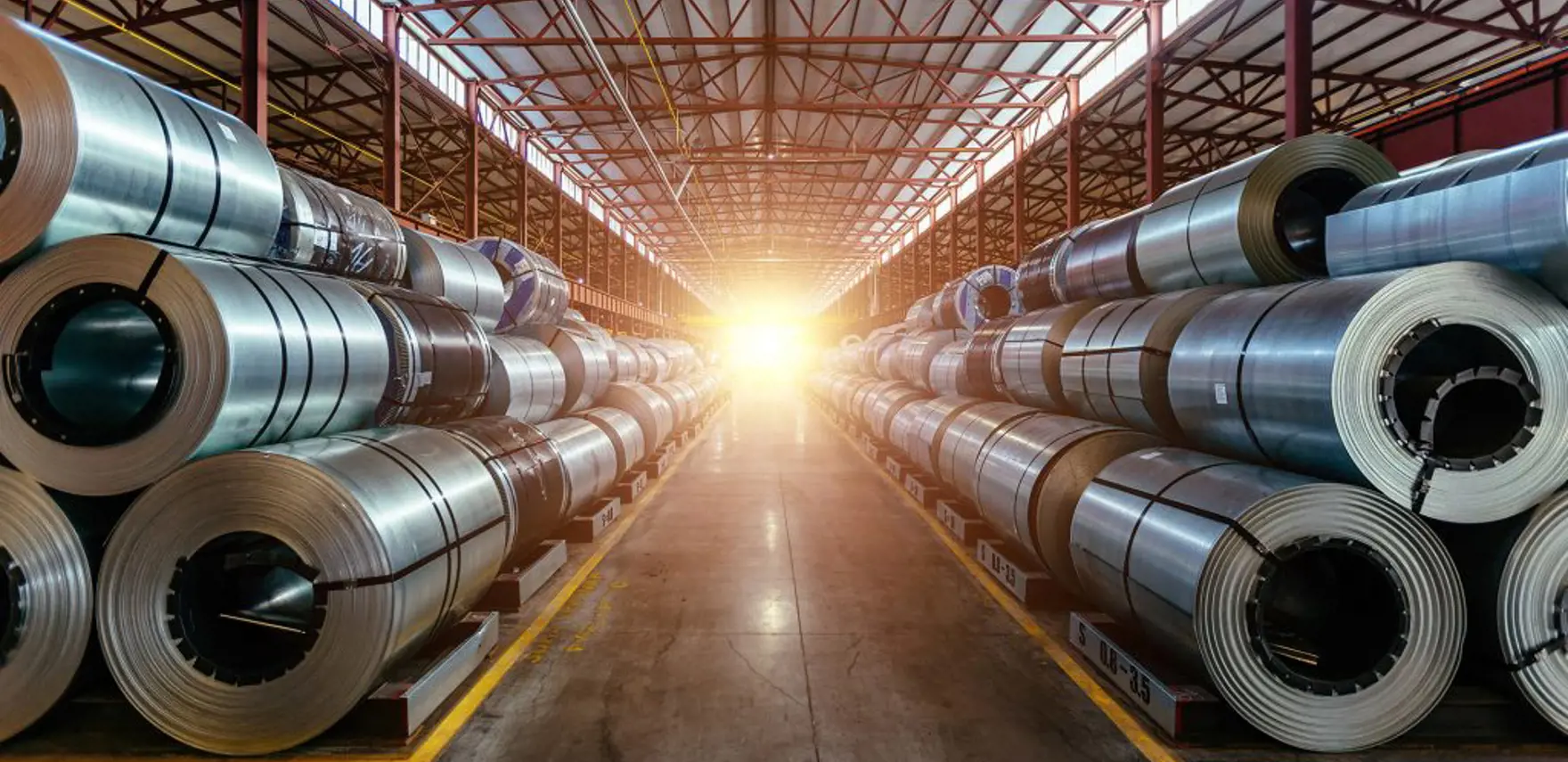
Steel manufacturer ArcelorMittal is to invest $1.5bn in a new electric arc furnace (EAF) in Dunkirk, a step towards decarbonising steel production. Having previously suggested that it would delay investments in low carbon steel, the company referenced favourable changes in policy conditions in France – citing the EU CBAM specifically – as a reason why the project could go ahead. An interesting addendum to our EU carbon pricing story above!
For your reading list
Our sustainability implementation partner, SIFA Strategy, have published their latest report, ‘ESG: Where is the value?’. The report draws on in-depth interviews with listed UK companies, and dives into how sustainability considerations are currently influencing strategy and decision making.
There’s a special focus on the extent to which ESG is embedded into core financial processes, with the Report urging organisations to act now on material risks and opportunities, as the pendulum of stakeholder scrutiny on ESG gradually swings back towards companies.
For your event list
We’re hosting an exclusive event in Dublin on April 28th - Sustainability Communications: The New Baseline. Join us for a discussion around where sustainability can go next in the wake of deregulation and scrutiny, and how to ‘go loud’ with confidence. Details here - we hope to see you there!
One Number
96%
Proportion of senior leaders who have said ESG has become more important to their organisation, or remained equally important, over the last 2-3 years, according to SIFA Strategy’s latest report. While political and media scepticism has increased in volume, the statistic suggests activity within companies has remained broadly stable.
Short List
Nestlé has surpassed its 2025 goal to reduce its direct and indirect emissions by a fifth. The Swiss firm published its integrated annual report on Monday, revealing that it had cut its emissions by 24.5% compared to a 2018 baseline.
Heineken has achieved 100% renewable energy usage in its production operations in Spain, achieved in large part through decarbonising industrial heat.
Microsoft has achieved its coal of matching 100% of its electricity consumption with renewables purchases – one of the milestone goals it set for itself in 2020.
To discuss any of these topics in more detail or speak to one of our Sustainability team about how to better your corporate sustainability efforts, email [email protected] -we'd love to hear from you.